Let Them Move: How Play and Physical Activity Are Rewiring the Autistic Brain
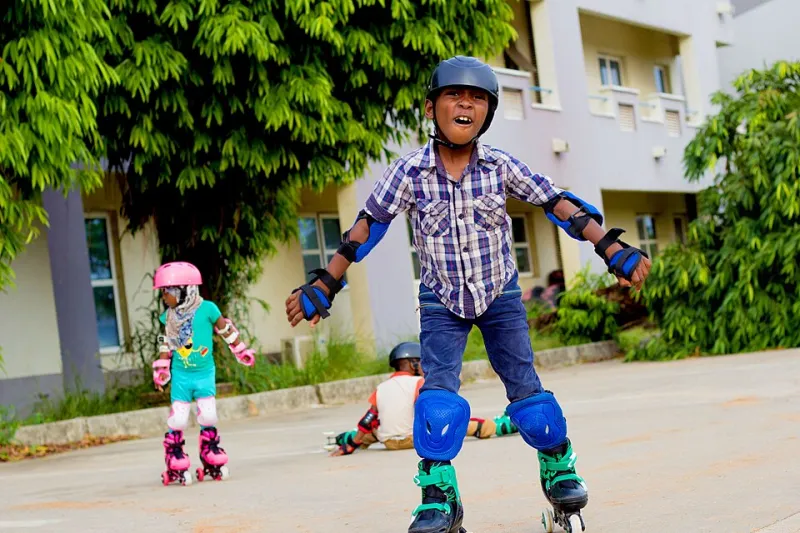
Photo: Eseneyen Enoobong, CC BY-SA 4.0, via Wikimedia Commons
For a long time, the conversation around autism support has centered heavily on what needs to be corrected—behaviors managed, skills drilled, deficits addressed. But a growing number of researchers, therapists, and parents are shifting the lens entirely. Instead of asking "what's wrong?", they're asking something more hopeful: what does this brain need to thrive?
And increasingly, the answer involves a lot more movement.
The Science Behind Moving to Learn
Here's something that might surprise you: the brain regions responsible for movement are deeply intertwined with those that handle emotion, attention, and social connection. The cerebellum, long thought of as just the body's "motor control center," is now understood to play a significant role in sensory processing, timing, and even emotional regulation.
For autistic individuals, who often experience differences in how sensory input is processed, this connection matters enormously. Physical activity—especially movement that challenges balance, coordination, and spatial awareness—stimulates the vestibular and proprioceptive systems. Those are the systems that tell your body where it is in space and how much pressure it's experiencing.
When those systems are well-regulated, kids often show improved focus, reduced anxiety, and a greater ability to engage socially. In other words, a good swing session or a romp through the backyard might be doing more neurological heavy lifting than it looks like from the outside.
What Proprioception and Vestibular Input Actually Do
Let's break those terms down a little, because they come up constantly in occupational therapy circles—and for good reason.
Proprioception is your body's internal sense of its own position. It's how you know your arm is raised even when your eyes are closed. For kids who are under-responsive to proprioceptive input, the nervous system is essentially hungry for that kind of feedback. Activities like carrying heavy objects, jumping on a trampoline, doing wheelbarrow walks, or even rough-and-tumble play deliver that input in a satisfying, regulating way.
Vestibular input comes from the inner ear and tells your brain about movement and gravity. Swinging, spinning, rolling down a hill, rocking in a chair—these all feed the vestibular system. Many autistic kids who engage in repetitive rocking or spinning are actually self-regulating in a really intelligent way. Their nervous systems are seeking what they need.
When we build these inputs into intentional play, we're not just entertaining kids—we're giving their brains the raw material they need to self-organize.
Moving Away from Symptom-Focused Thinking
Here's where the cultural shift comes in. Traditional intervention models have often focused on reducing or eliminating behaviors that look "different"—the hand-flapping, the spinning, the seeking of sensory input. But a growing number of practitioners are pushing back on that framework.
Dr. Stuart Shanker, a self-regulation researcher whose work has influenced educators and therapists across North America, argues that many behaviors labeled as "problematic" are actually stress responses or self-regulation strategies. When we support the underlying nervous system needs—rather than just targeting the behavior—kids often become more regulated on their own terms.
Play-centered approaches lean into this. Instead of telling a child to stop spinning, a play-centered therapist might ask: what is this child getting from spinning, and how can we build that into meaningful, joyful activity?
For many families, this reframe is genuinely life-changing.
Stories from the Backyard and the Gym
Take the experience of families who've embraced what some call "therapeutic play" at home. A mom in Colorado shared in an online autism parenting community that after setting up a simple obstacle course in her backyard—crawling under a tarp, jumping between stepping stones, balancing on a low beam—her 7-year-old son began having fewer meltdowns in the afternoons. She hadn't changed his diet, his therapy schedule, or anything else. Just added 20 minutes of active outdoor play before homework time.
Another family in Georgia started taking their teenage daughter to an adaptive rock climbing gym. Within a few months, they noticed she was initiating more conversation, tolerating frustration better, and sleeping more soundly. The climbing, they realized, was giving her proprioceptive and vestibular input in a socially engaging, confidence-building context.
These aren't isolated anecdotes. They reflect a pattern that researchers and occupational therapists are seeing across the board: when autistic individuals get meaningful, joyful movement, other areas of life often improve alongside it.
Practical Ideas You Can Start This Week
You don't need a fancy gym or a specialized therapist to bring more regulating movement into your child's day. Here are some approachable ideas:
- Set up a sensory movement station indoors. A mini trampoline, a therapy swing hung in a doorway, or even a pile of couch cushions to jump into can make a big difference.
- Try "heavy work" before challenging tasks. Before homework or transitions (which are often stressful), have your child carry groceries, push a laundry basket, or do some wall push-ups. This loads the proprioceptive system and helps regulate the nervous system.
- Take it outside whenever possible. Unstructured outdoor play on uneven terrain—grass, sand, mulch—naturally challenges balance and coordination in ways that flat indoor surfaces don't.
- Incorporate rhythm and music. Dancing, drumming, and marching all engage the vestibular system and have the added bonus of being genuinely fun for most kids.
- Follow your child's lead. If your child is drawn to a particular type of movement, lean in. That preference is often their nervous system communicating exactly what it needs.
Redefining What "Therapy" Looks Like
One of the most meaningful shifts happening in autism support right now is the recognition that healing and growth don't always look clinical. Sometimes they look like a kid giggling as they roll down a hill. Or a teenager finding their footing—literally and figuratively—on a climbing wall. Or a family discovering that their afternoon walks together are doing more than any worksheet ever did.
At Son-Rise Wellness, we believe that every family deserves access to approaches that honor the whole child—not just the diagnosis. Movement is one of those approaches. It's ancient, it's free, and it works with the brain's natural architecture rather than against it.
Your child's nervous system is not broken. It's seeking. And sometimes, the most therapeutic thing you can offer is a good, joyful reason to move.