Spent by 3pm: Understanding Why Your Autistic Child Unravels After School — and How to Help Them Recover

Photo: Hine, Lewis Wickes; National Child Labor Committee Collection, Public domain, via Wikimedia Commons
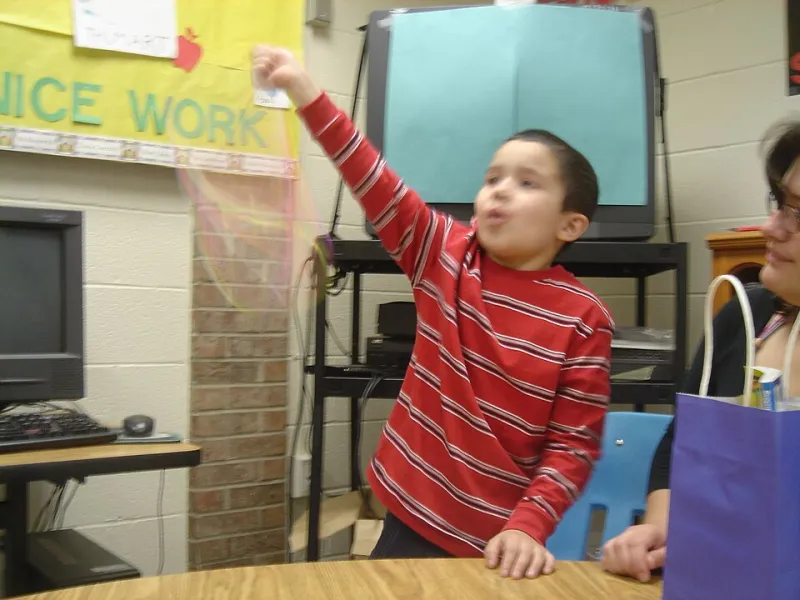
You've probably lived this scene more times than you can count. The school day ends, your child climbs into the car or walks through the front door, and within minutes — sometimes seconds — everything falls apart. Tears, screaming, shutting down completely, refusing to speak. Teachers send home glowing reports. The classroom aide says your kid was a star today. And yet here you are, navigating what feels like a full emotional storm in your living room.
Here's what most people don't tell you: that storm is actually evidence of something remarkable. Your child worked incredibly hard today. Not on math or reading — though they did that too — but on something far more exhausting. They spent the entire school day managing how they appeared to everyone around them.
That work has a cost. And your home is where the bill comes due.
What Masking Actually Looks Like in a School Day
Masking — sometimes called camouflaging — is the process by which many autistic individuals suppress, hide, or adjust their natural responses to better blend into neurotypical social environments. For kids, this plays out across dozens of small moments throughout a school day.
It's forcing eye contact during a teacher's instructions even though it feels overwhelming. It's sitting still in a chair when every nerve in your body wants to move. It's swallowing the urge to talk about your favorite topic because you've learned it makes other kids pull away. It's decoding the unspoken rules of the cafeteria, the hallway, the playground — a constantly shifting social landscape with no clear map.
None of this is conscious strategy. For most autistic kids, it's become automatic, a kind of social survival mode that runs in the background all day long. But automatic doesn't mean free. The brain is burning through cognitive and emotional resources the entire time, and by the time the final bell rings, the tank is genuinely empty.
Researchers have described this as a kind of chronic low-grade stress response — the nervous system held in a state of heightened alertness for hours at a time. When the pressure finally lifts, the system doesn't just relax. It crashes.
Why Home Is Where the Crash Happens
This part trips a lot of parents up. If school is so hard, why does my child seem to hold it together there? Why do we only see the fallout at home?
The answer is actually a sign of how safe your child feels with you.
Home — and specifically, you — represents the one place where your child doesn't have to perform. The mask can come off. The nervous system finally gets the signal that it's okay to stop bracing. And when years of accumulated tension release all at once, it doesn't look like peace. It looks like chaos.
What parents often experience as a behavioral problem in the after-school hours is actually a nervous system doing exactly what it's supposed to do: releasing stored stress in the presence of someone it trusts completely. That's not failure. That's attachment. That's love, expressed through a full-body meltdown.
Recognizing Your Child's Unique Crash Pattern
Every child's post-school unraveling looks a little different. Some kids go loud — meltdowns, aggression, emotional flooding that seems wildly out of proportion to whatever triggered it. Others go quiet — retreating to their room, refusing to eat, becoming unreachable for hours.
Both are the same thing wearing different faces: a nervous system in recovery mode.
Spend a week or two observing without intervening, if you can. Notice:
- How long after arriving home does the crash tend to hit? Some kids hold on through the car ride and lose it at the front door. Others manage to get a snack and change clothes before the wave breaks.
- What does your child's crash look like? Meltdown, shutdown, or a mix of both?
- Are there specific days that are harder? Mondays after a weekend of less structure, Fridays after a full week, days with schedule changes or assemblies?
- What helps, even a little? Some kids need physical movement. Others need total quiet. Some need food immediately. Some need you close by without speaking.
This isn't about diagnosing or fixing anything. It's about learning your child's nervous system the way you'd learn a new language — one pattern at a time.
Building a Decompression Bridge
The transition from school to home is its own neurological event. Think of it less like a door opening and more like a pressure valve. The goal isn't to prevent the release — it's to make the release safer and more supported.
A few approaches that many families find genuinely helpful:
Create a no-demands window. For the first 20 to 45 minutes after your child gets home, take the pressure completely off. No questions about their day. No reminders about homework. No decisions to make. Just space. This isn't permissiveness — it's nervous system first aid.
Offer sensory anchors. A weighted blanket, a specific snack, a familiar show, time outside with no agenda — whatever your child's nervous system finds regulating. Think of these as landing pads, not rewards.
Watch the blood sugar. This one is easy to overlook, but genuinely matters. A child who hasn't eaten well at school or who skipped lunch because the cafeteria was too loud is also running on fumes metabolically. A protein-rich snack shortly after arriving home can do more for emotional stability than almost anything else. Hard-boiled eggs, nut butter on apple slices, cheese — simple, real food that gives the brain something to work with.
Protect the transition from siblings and screens. If you have multiple kids, try to give your autistic child a few minutes of quiet before the household gets loud again. And while screens can be regulating for some kids, for others they can actually prolong the crash by adding more sensory input to an already overloaded system. Know your child.
Reframing the Whole Picture
It's hard not to feel discouraged when the after-school hours feel like a daily ordeal. It can make you question whether school is working, whether your child is struggling more than anyone realizes, whether you're somehow making things worse.
But try to hold this alongside that discouragement: your child is doing something genuinely hard, day after day. They are navigating a world that was largely not designed for the way their brain works, and they are doing it with a level of effort that most people around them will never see or appreciate.
The crash at home is not a red flag about your child's progress. It's a measure of how much they're carrying — and how much they trust you to be there when they finally set it down.
Your job isn't to prevent the crash. It's to make sure that when it happens, your child lands somewhere soft.
That's not a small thing. That's everything.